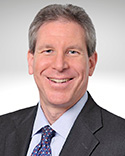
Partner in the Appellate Division of Duane Morris LLP's Trial Practice Group in the Los Angeles office, and leader of the firm's West Coast appellate practice.
Appellate Law (Certified), Litigation
The history of California's judicial confirmation process reveals that long before the famous 1982 "Duke Nukem" deadlock, the 1940 rejection of eminent scholar Max Radin by the Commission on Judicial Qualifications marked an unprecedented and politically charged failure to confirm a gubernatorial nominee.
Two columns ago, this space described the Commission on Judicial Appointments (COJA), which convenes public hearings to confirm Gubernatorial appellate nominees. These hearings are typically joyous celebrations with foregone confirmations. Last month's column described a notable exception from roughly 42 years ago: the December 1982 "Duke Nukem" COJA hearing, where an unusual two-member COJA panel deadlocked and three nominees were not confirmed. That column noted that this was the only time a "COJA" panel failed to confirm nominees. But COJA was put in quotes because, while technically true, there is another story yet to tell, taking us back another 40 years or so, all the way to a fateful hearing in July 1940.
Some background. Before "COJA" was so named in 1979, the panel that considered appellate nominees was called the California Commission on Judicial Qualifications. That commission was created in 1934 via a constitutional amendment as part of the so-called Commonwealth Club Plan. That "plan" was developed in the 1930s to address concerns that partisan politics and special interests were influencing judicial selections. Under the plan, the governor nominates candidates to fill appellate vacancies; then a commission reviews and votes to confirm (or not); and then the newly confirmed justice faces an unopposed retention vote at the next election. See David A. Carrillo, Governing California, ch. 12 (The California Judiciary) at 323 (Berkley Public Policy Press 3d ed. 2013).
Some more background. Now please shift gears to consider the amazing Max Radin. Professor Radin was born in Kempen in the German Empire (in what is now Poland) in 1880. Coming from a line of rabbis, Radin emigrated to New York when he was four. His parents taught him Hebrew, Latin and ancient Greek. At 19, he earned his BA from City College of New York. He then picked up a law degree from NYU in 1902 (was admitted to the New York bar), and then a doctorate from Columbia in 1909 with a thesis on ancient Greek and Roman corporations. After teaching at Columbia, he moved to Berkeley to be a professor of law at the University of California, where he taught from 1918 to 1948. From 1940 to 1948, he was Berkeley's "John Henry Boalt Professor." He was admitted to the California bar in 1920 (Bar #7171). He served on the Commission on Uniform State Laws (1941-1948). He later taught at Hastings and Duke and was a member of the Institute for Advanced Study--yeah, that Princeton place where slouches like Einstein, Oppenheimer, von Neumann and Gödel loitered.
Radin was a literal renaissance man, publishing over 700 scholarly works on archaeology, philology, Hebrew, Greek, Latin, history, logic, philosophy, psychology, history, literature anthropology--oh yeah, and a lot on law, too. (See an abbreviated bibliography at 36 Cal. L. Rev. 165-68.) Erudite doesn't begin to describe him. The joke at Boalt Hall was that "every month or two [Radin] would call in a stenographer and say, 'Here, take a book.'" A.M. Kidd, Max Radin, 38:5 Cal. L. Rev. 795 (Dec. 1950). As if his "historical knowledge and command of languages" were not enough, he was apparently a nice fellow too, with a wonderful sense of humor, and in "great demand all over the country for addresses before schools and colleges and clubs." Id. at 796-97.
Turning back to the law for a moment, Justice William O. Douglas wrote that Radin "knows more of the roots of the common law, the civil law, and the Roman law than almost any other living American." Douglas, Max Radin, 36:2 Cal. L. Rev. 163 (June 1948). Douglas wrote that Radin's "work on the interpretation of statutes has few if any equals in our jurisprudence," and compared his influence on the law to Holmes and Cardozo. Id. at 164-65. In short, Radin was a remarkable legal scholar--indeed he was simply an overall outstanding scholar, period.
Nomination. In 1940, California's 29th Governor, Culbert Levy Olson (Gov. from 1939 to 1943) nominated Radin to the California Supreme Court. Governor Olson, a lawyer and the first openly atheist governor of any state (he refused to say "so help me God" during his oath of office), was a New-Dealer Democrat (openly supported by FDR) who soundly defeated incumbent Governor Frank Merriam (known for suppressing the 1934 Longshore Strike). Olson was the first Democrat to win a California gubernatorial election since 1894. He was pro-labor and a "leftist" from a progressive family (his mother, a suffragette, was the first female elected official in Utah).
Not surprisingly, Governor Olson nominated someone with similar views: Radin wasn't just a scholar, he actively participated in the issues of his day--on the "liberal" side. Radin had supported witnesses charged with contempt to refuse to testify before the Yorty Assembly Committee on Subversive Activities. He also supported two maritime union officials convicted with life-sentences in the 1930's high-profile "Oakland ship murder case." The prosecutor in that case was Alameda County District Attorney Earl Warren. See Daniel Cornford (editor), Working People of California (Univ. of Cal. Press 1995) pp. 225-26 ("No group of workers has played a more important role in the labor history of California than its seafaring and longshore workers. ... mounting tensions exploded into the 1934 longshoremen's strike--one of the most dramatic events in California labor history.")
(Cinematic aside: Interested in violence and corruption among longshoremen? Check out Marlon Brando and other notables of the era, e.g., Karl Malden, Lee J. Cobb, Rod Steiger, Eva Marie Saint, in On the Waterfront (1954), with a score by a guy named Leonard Bernstein.)
CJQ hearing. July 23, 1940: In Britain, the civilian volunteer force was officially named the "Home Guard" to defend against a potential Nazi invasion. In the United States, the Welles Declaration condemned the Soviet annexation of the Baltic states under the Molotov-Ribbentrop Pact. In California, there was a CJQ hearing on Radin's nomination to the California Supreme Court. The CJQ panel consisted of Chief Justice Phil Gibson (appointed to the Supreme Court and then to the Chief's seat by Governor Olson), Attorney General Earl Warren and First District Presiding Justice John Nourse. The nominee, Max Radin, had support from United States Supreme Court Justice Felix Frankfurter and two 9th Circuit judges. See Shaun Hoting, The Crocodile in the Bathtub: An Examination of California's System for Judicial Selection, 4 Am. Univ. Crim. Law Brief 4, 6 (2009).
Gibson voted for Radin. But Warren and Nourse voted against him.
Immediate fallout. Radin's defeat, and the lack of any explicit justification for it, captured national attention. See 52:31 Washington Township News Register, The Max Radin Case (Aug. 2, 1940) ("there has been a great deal of beating around the bush as to just why Mr. Radin failed to pass muster"; the CJQ "should 'out with it' and tell the people of California just why [Radin] was turned down").
Radin was Cal's law school's "most widely known" professor and his snubbing was called "unprecedented and officially unexplained." See Arthur Caylor, Radin's Rejection Stirs California; Board's Veto of Law Professor for State High Court Brings Talk of Abolishing Body - A Widely Known Teacher, New York Times 56 (July 28, 1940) (noting the "surprising refusal" of CJQ to confirm). The "pressure of public opinion gradually [] brought out certain details." Id.
PJ Nourse expressed his belief that "men with experience in the lower courts should be elevated to the Supreme Court, and that professors or practicing attorneys, without judicial experience, are likely to be of 'the advocate type, rather than the judicial type.'" See 52:31 Washington Township News Register (Aug. 2, 1940). Nourse also had urged abolition of the commission and a return to elections for justices. But "there is every reason to believe that the real reason for Professor Radin's rejection is that he is a known 'leftist' ...." Id.
No one could seriously contend that Professor Radin was not sufficiently learned in the law. He had written on countless diverse legal topics (divorce, administrative law, freedom of speech, etc. ad astra) and it would be hard to imagine a candidate with a stronger academic background and mastery of the law as a whole.
Justice Douglas wrote that "[t]he moments when Max Radin has been the advocate of civil liberties have been at once the brightest and the most fateful in his career." Douglas, supra, at 164. Indeed. "It is ironical that for [his] defense of the Constitution ... he was labelled a communist and denied confirmation to the Supreme Court ...." Kidd, supra, at 797. Douglas lamented that "Max Radin would have brought a living liberalism to the Bench. California was deprived of that opportunity .... For [his] espousal of liberty he paid a very heavy price." Douglas, supra, at 165.
Later fallout. With Radin's appointment defeated, Governor Olson needed to find someone else. The Governor's executive secretary, a guy named Stanley Mosk, called Radin and asked for a recommendation. Radin suggested another scholarly Berkeley law professor with a Ph.D., this time one who had served as a deputy attorney general under Earl Warren: Roger J. Traynor. The CJQ unanimously confirmed Traynor on Aug. 13, 1940. Twenty-four years later, Traynor followed Gibson as California's Chief Justice. Traynor's New York Times obit said he "was often called one of the greatest judicial talents never to sit on the United States Supreme Court." Les Ledbetter, Roger J. Traynor, California Justice, New York Times (May 17, 1983).
Earl Warren portrayed Olson as a leftist in the 1942 Gubernatorial election and easily defeated him to become California's next governor. And, of course, he went on to become Chief Justice of the United States. The day before Olson left office, he appointed the 30-year-old Mosk to the L.A. Superior Court. In 1964, when Traynor's elevation to Chief Justice created a supreme court opening, Mosk succeeded to Traynor's old seat.
One of Radin's last published articles commended Governor Warren for his stand on the loyalty oath. Kidd, supra, at 797. What a mensch.
Want to know more? Check out David M. Margolick's The Nomination of Max Radin: People, Politics and the California Supreme Court (1977).
Special thanks to the legal luminary Howard B. Miller, who clerked from Justice Traynor, for highlighting this fascinating event in California appellate legal history.
Reprinted with permission from Daily Journal.